

 Cart is empty
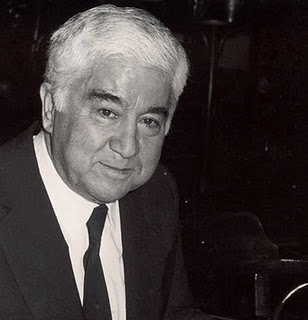
In a crowded office, papers stacked high and ink barely dry, a man sat smiling to himself as he wrote. Not because something was funny, but because something didn’t make sense.
A form that contradicted itself. A rule no one could explain. A system that worked on paper but failed in real life.
Aziz Nesin didn’t invent these problems; he simply refused to ignore them, and instead of shouting about them, he chose something far more effective:
He mocked them.
Not Just a Writer, but a Mirror to Society
Born in 1915, Aziz Nesin grew up during a time when Turkey was redefining itself. New systems, new institutions, new rules. Everything was being rebuilt, and as those changes came about, contradictions became a constant.
That tension shaped Aziz Nesin’s life and his voice as a writer because he wasn’t interested in creating distant, fictional worlds. He wanted to focus on the one he lived in.
In his works, Aziz Nesin observed how systems worked, how people adapted to them, and how often those systems failed. His writing didn’t exaggerate reality as much as it clarified it, which in turn gave readers a chance to see it with fresh eyes.
In short, Aziz Nesin’s literature wasn’t about escapism; it was about recognition.
Turning Absurdity Into Literature
Aziz Nesin’s stories are filled with familiar figures: bureaucrats who follow rules they don’t understand, officials who enforce policies blindly, and ordinary people trapped in systems that seem created with the explicit purpose of confusing them.
That’s what makes Aziz Nesin’s satire so powerful. He didn’t invent the absurdity, but he certainly reveled in it.
By taking everyday situations and pushing them just slightly further, Azis Nesin’s books exposed how illogical the systems were, building humor slowly throughout a situation that, by the end, became impossible to ignore.
Laughter came first, but realization about the state of things and what they should be always came after.
A Life That Refused to Stay Quiet
Aziz Nesin’s biography cannot be separated from the consequences of his writing.
Again and again, the same pattern emerged: he published, people responded, and authorities pushed back. His satire wasn’t harmless entertainment; it was criticism, the kind that invited people to act and made power uncomfortable.
That meant censorship, arrests, and constant pressure.
Still, he continued, because he believed that writing carried responsibility, and if something was wrong, staying silent meant accepting it.
For Aziz Nesin, literature wasn’t just expression; it was participation in public life.
That belief led him to create the Nesin Foundation, a long-term educational project designed to support children without access to opportunities.
He didn’t treat it as a symbolic gesture. He funded it with his own work, using his own income to keep it running even as the people in power pushed back.
Why Aziz Nesin Still Matters
There’s a reason Aziz Nesin’s works still resonate with readers to this day. The things he wrote about haven’t disappeared; they’ve just evolved, but the core problems are often familiar.
Aziz Nesin’s impact on modern satire isn’t just because of the quality of his works, but because he showed that humor could be used to question systems, highlight contradictions, and encourage people to think more critically about the world around them.
That is why Aziz Nesin remains relevant today.
A Real-Life Hero Who Refused to Look Away
Aziz Nesin’s life is ultimately about using storytelling not just as a way to entertain but as a way to understand the world and act upon it, and that’s exactly what we at Global Edutopia are about.
If you want to learn about other real heroes who helped shape the world through stories and actions, click here to visit our real-life hero section.