

 Cart is empty
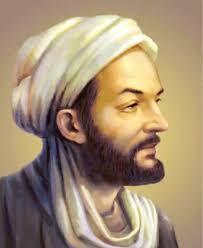
In a quiet room filled with books, a teenage boy sat cross-legged on the floor, reading through the night. Outside, the world slept. Inside, his mind raced. What is the body? What is the soul? How do we know what we know?
Avicenna, also known as Ibn Sina, wasn’t just trying to find answers. He was chasing certainty itself.
Long before modern hospitals, long before the scientific method had a name, he was already building a system to understand both the human body and the human mind. And in doing so, he changed both forever.
Not Just a Scholar, but a System Builder
Born near Bukhara around the late 10th century, Ibn Sina’s early life didn’t follow a slow path. By his teenage years, he had already mastered logic, philosophy, and medicine.
But knowledge alone wasn’t enough for him.
He wanted structure.
He wanted something others could learn from.
While others learned subjects, Avicenna organized them. He believed that understanding the world meant connecting everything: science, philosophy, ethics, and even politics.
Avicenna’s works weren’t just a collection of ideas; they were a framework for thinking.
He didn’t just ask, “What is true?”
He asked, “How do we organize truth so others can understand it too?”
That was Ibn Sina’s philosophy to its core: not only acquiring knowledge but also shaping it in a way that could be shared with the world.
The Man Who Turned Knowledge Into Medicine
Avicenna’s contributions to medicine are where his impact becomes impossible to ignore.
In his most famous work, The Canon of Medicine, Avicenna created a system, a way to diagnose, treat, and understand the human body with clarity and, more importantly, consistency.
For Avicenna, medicine was the science of understanding the body in health and disease, with the goal of preserving and restoring it, an idea that might sound obvious today, but only because he thought of it first.
For centuries, the Canon was used across the Islamic world and Europe as a standard medical text. Students didn’t just read it; they learned how to think through it, and this is just one success in Ibn Sina’s life story.
Philosophy That Asked Bigger Questions
If you stop at medicine, you miss half the story because Avicenna the philosopher was just as influential as Avicenna the physician.
Unlike many philosophers of the golden age, Avicenna believed that philosophy wasn’t about abstract thinking for the sake of abstract thinking, but rather that it was about understanding reality as deeply as possible.
That was who Ibn Sina was at his core, someone who cared about understanding the truth of the world just as much as he cared about how that truth came to be.
One of his most famous ideas, often called the “floating man” thought experiment, asked a simple but powerful question:
If you were suspended in space, with no senses, would you still know you exist?
This question pointed towards something deeper: that self-awareness isn’t dependent only on what we experience with our bodies, but rather that it comes from within us.
Why Avicenna Still Matters
There’s a reason Avicenna’s works are still studied today. Throughout his history, Avicenna approached every branch of science he touched as part of a larger whole.
He saw knowledge as something that required discipline, curiosity, and clarity to acquire.
At its core, that’s what Avicenna’s biography is about. The pursuit of knowledge as a practical way to understand the world around us.
Aviccena’s books aren’t his legacy, but rather, the mindset he used to write them:
Understand deeply.
Question carefully.
And never stop connecting the dots.
A Real-Life Hero Who Connected It All
Ibn Sina’s achievements go beyond just acquiring knowledge, but rather connecting ideas as parts of a whole.
His works in medicine, philosophy, and science didn’t exist in isolation; he used them to create a system that helped people understand the world, and understanding the world is precisely what we want to do at Global Edutopia.
If you want to learn about other real-life heroes that shaped history, click here. Our real heroes series is full of inspiring stories of philosophers, heroes, pilots, and other historical figures who helped shape the world.