
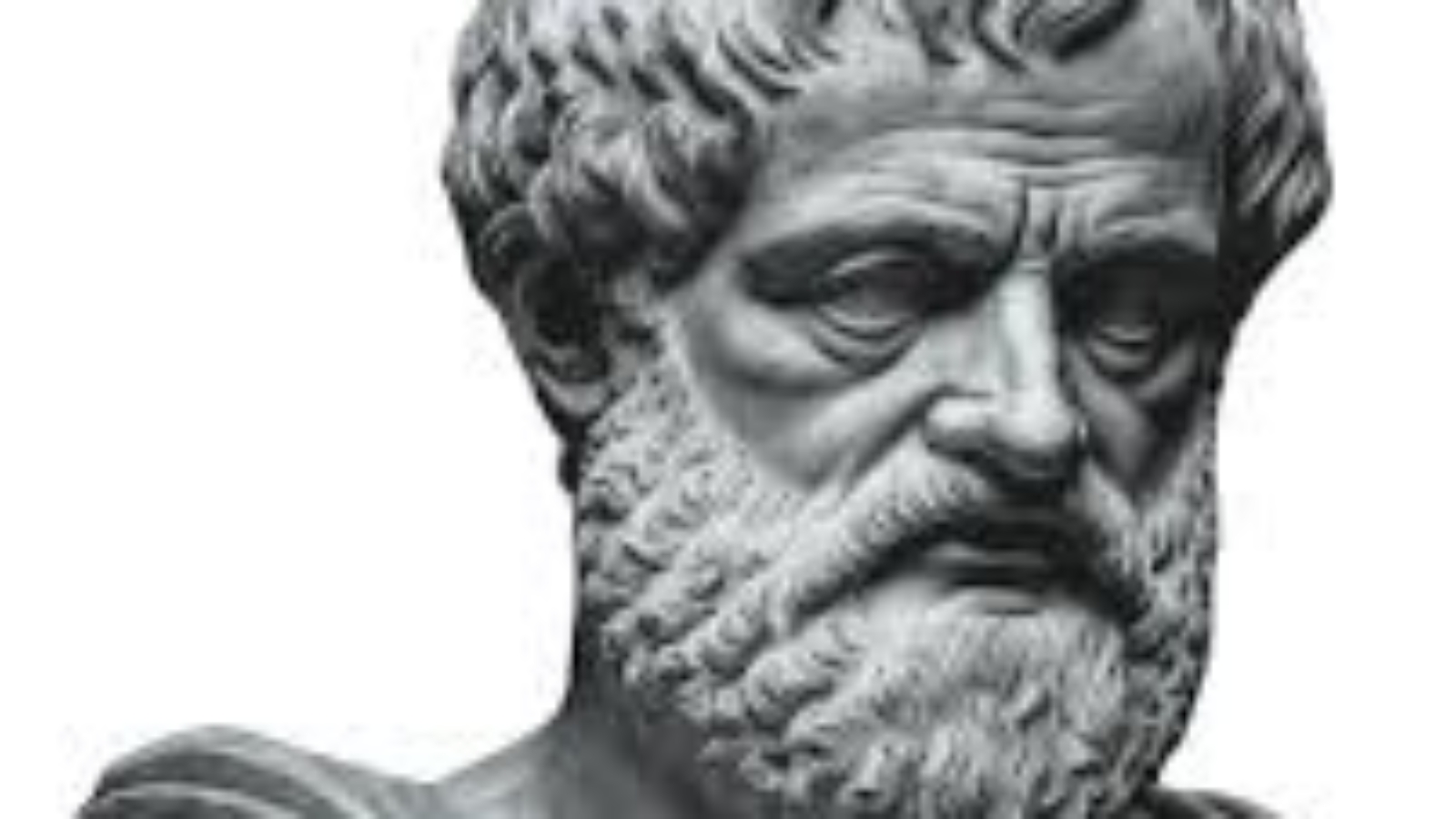
In the sunlit courtyards of ancient Athens, where marble columns framed the sky and ideas cut deeper than swords, one man refused to accept easy answers: Aristotle.
He didn’t just study the world; he dissected it, asking why leaves fall, why governments fail, and why people choose virtue over vice.
While others chased perfect ideals, Aristotle turned his gaze to the ground beneath his feet, determined to understand life as it was actually lived.
Even today, Aristotle’s biographies feel like an invitation to always question, reason carefully, and build knowledge through careful observation and thought.
Who Was Aristotle?
Aristotle grew up surrounded by science before he ever stepped into philosophy. His father served as a royal physician, which meant young Aristotle was exposed early to anatomy, medicine, and the discipline of careful observation.
When he was seventeen, he traveled to Athens and joined Plato’s Academy, the most prestigious intellectual center in the ancient world. For nearly twenty years, he studied there. He debated. He absorbed. He questioned.
Throughout his life, Aristotle was never content to repeat what others believed. Even as Plato’s student, he was forming ideas that would later challenge his teacher’s most famous theories.
After his teacher’s death, Aristotle left Athens, traveled widely, studied marine life along the Aegean coast, and eventually became tutor to a young Macedonian prince named Alexander, who the world would come to know as Alexander the Great.
Then he returned to Athens and founded his own school, the Lyceum, where his real work began.
Aristotle’s Philosophy: Thinking From the Ground Up
The biggest constant in Aristotle’s life was the need to understand everything.
His philosophy is straightforward, at least at its base: Knowledge starts with what we can observe. Not what we imagine. Not what we wish were true. What we can see, test, and examine.
To Aristotle, facts that could be observed, as well as the study of plants, animals, politics, and people, meant more than just collecting data; it meant understanding the world.
Following Aristotle’s teachings, students collected data, they dissected animals, and compared governments. They didn’t just sit around and discuss, nor did they chase mysteries; they chased clarity.
He organized knowledge into categories. He developed methods for reasoning. He built systems for ethics, politics, biology, poetry, and metaphysics, and he shared them with the world.
Aristotle's Works & Teachings
Aristotle didn’t believe happiness was a feeling. He believed it was a practice.
At the heart of Aristotle’s ethics was a deceptively simple idea: virtue lives in balance. Courage stands between recklessness and cowardice. Generosity stands between wastefulness and greed.
Aristotle explained this idea as the Golden Mean, and this virtue-first approach, where he chose excellence over extremes, was reflected throughout his works.
- In Nicomachean Ethics, he explored what it truly means to live well.
- In Politics, he examined how societies flourish or collapse.
- In Poetics, he broke down storytelling itself, analyzing tragedy, character, and emotion with almost surgical precision.
To Aristotle, logic was the backbone that held systems together. Arguments needed structure. Claims needed proof. Ideas needed order, so he developed a method of reasoning so clear and systematic that it dominated Western education for nearly two thousand years.
And beyond ethics and logic, Aristotle’s theories reached into biology, physics, rhetoric, government, and art. He categorized animals. He analyzed causes. He asked not only what something is, but why it exists.
Why Aristotle Still Matters
Aristotle’s contributions to philosophy helped center what for many was just “sitting around and pondering.”
He built bridges between abstract thinking and real-world observation. He created frameworks that scholars in the Islamic Golden Age would preserve and expand. Medieval universities would later treat his works as intellectual foundations.
Aristotle’s legacy lives in classrooms, laboratories, and conversations about what it means to live well. He didn’t just ask, “What is truth?” He taught generations how to search for it.
Whenever someone weighs evidence, structures an argument, studies ethics, or classifies living things, they are working within systems he helped design.
Learn About Other Real-Life Heroes
At Global Edutopia, we believe real-life heroes aren’t only those who conquer lands or fly planes. Some conquer confusion. Some build clarity.
Aristotle did both.
Click here if you want to explore more real-life heroes who changed the world not with weapons, but with wisdom.